
How VAF works in a craft business
In this example VAF drafts replies, quotes and reminders for a joinery, and the master craftsman or office approves each before it goes out.
A craft business earns its money on site, but every job starts and ends in the office, where inquiries are answered, quotes written, hours recorded and unpaid invoices chased. This example describes no particular company. It shows how a joinery, an electrical contractor or a plumbing and heating firm could work with VAF, which drafts while the team checks and approves.
The starting point
According to 2025 figures from the German Confederation of Skilled Crafts (ZDH), Germany has about 1.04 million craft businesses employing some 6.2 million people, roughly six per business. Usually the owner, often a master craftsman, sells, costs and plans jobs while still working on site, and the office is often run by one person part-time.
An inquiry leads to a site visit and measurements, then a quote and an order with the wholesaler. The work produces photos, timesheets and site diary entries, and at the end come the invoice and, where needed, a reminder. Much of this is paperwork. In a 2023 ZDH survey, 74 percent of businesses reported a growing bureaucratic burden.
What VAF prepares
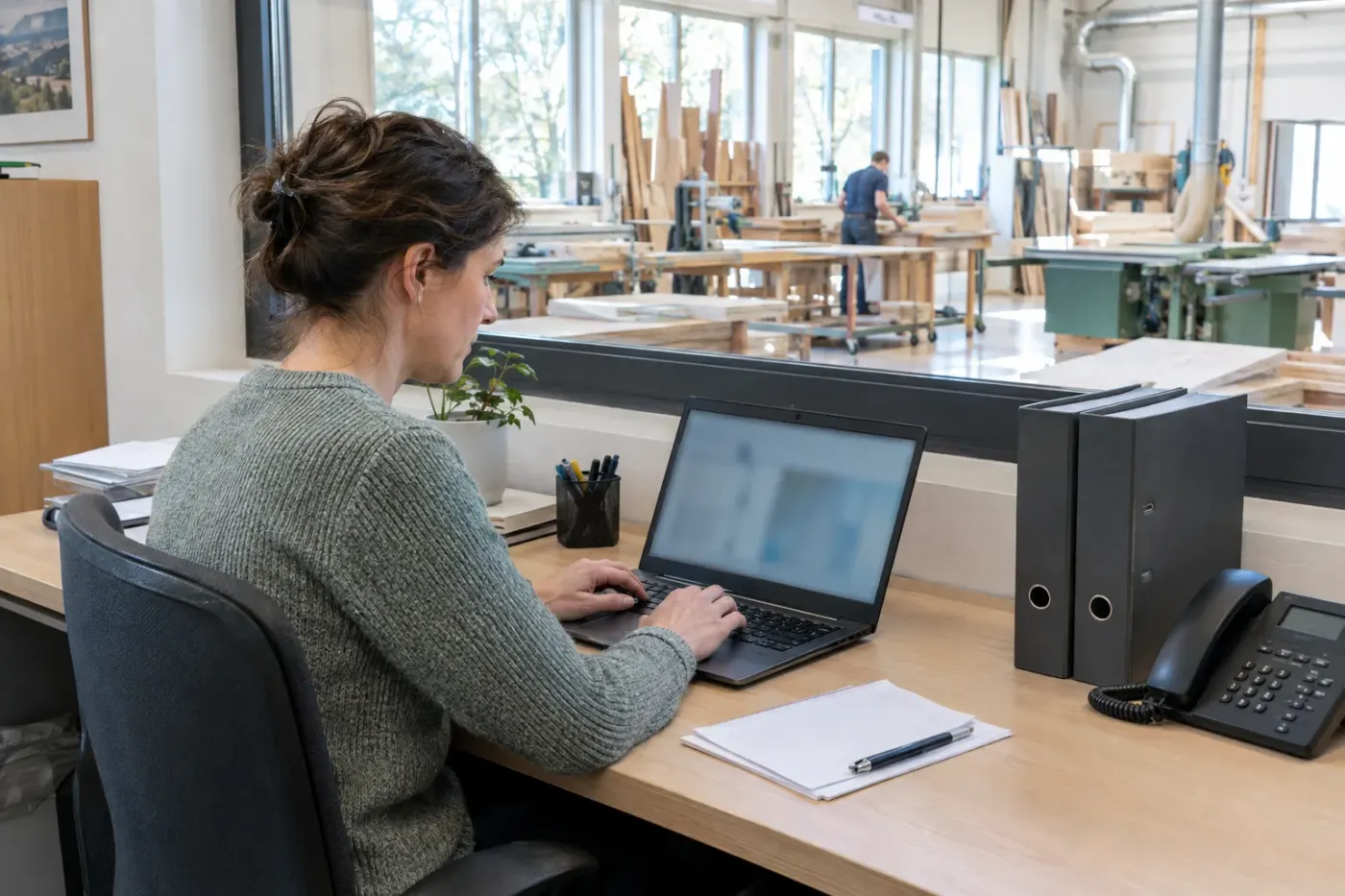
VAF works with the firm's mailbox, folders and templates. In this example VAF takes on the tasks below, each ending in a draft that a person checks.
- VAF reads and sorts new inquiries in the mailbox and drafts a reply to each, asking for missing details such as measurements, photos or the address. VAF does not read attachments, so the office saves plans and other documents to a folder. Phone inquiries stay with the office.
- From the firm's templates and standard item texts, VAF drafts a quote as a Word document, plus a materials list priced from the wholesalers' lists. VAF follows the template's structure but writes a new document, and the office adds letterhead and layout.
- When a tender's bill of quantities comes as a PDF, VAF summarises trade, location, deadlines and scope. The owner decides whether to bid.
- From notes and hours the team saves to a shared folder, VAF drafts the site diary entry.
- From measurements and timesheets, VAF lists what is due for billing, and the office issues the invoice itself. From the exported list of open invoices, VAF picks out the overdue ones and drafts payment reminders.
VAF has no direct connection to trade or accounting software. Price lists, open items and other data arrive as an export in a folder on the computer VAF runs on. An Excel sheet is read only up to row 50 and a CSV file in that folder in full, so longer lists are best exported as CSV.
How the team approves
Replies, quotes and payment reminders reach customers only after someone in the firm has approved the draft. Here the office checks replies and reminders, and the master craftsman checks quantities and prices in each quote, since he saw the site and did the costing. The fitter who was on site confirms the diary entry the same day.
VAF works when someone asks in the chat and on a schedule. Results of scheduled runs, such as the weekly list of overdue invoices, appear in VAF's web interface and, if wanted, in a messenger. Because a language model can get things wrong, a person always checks quantities, hours and prices against the paperwork before a draft counts.
What stays with people
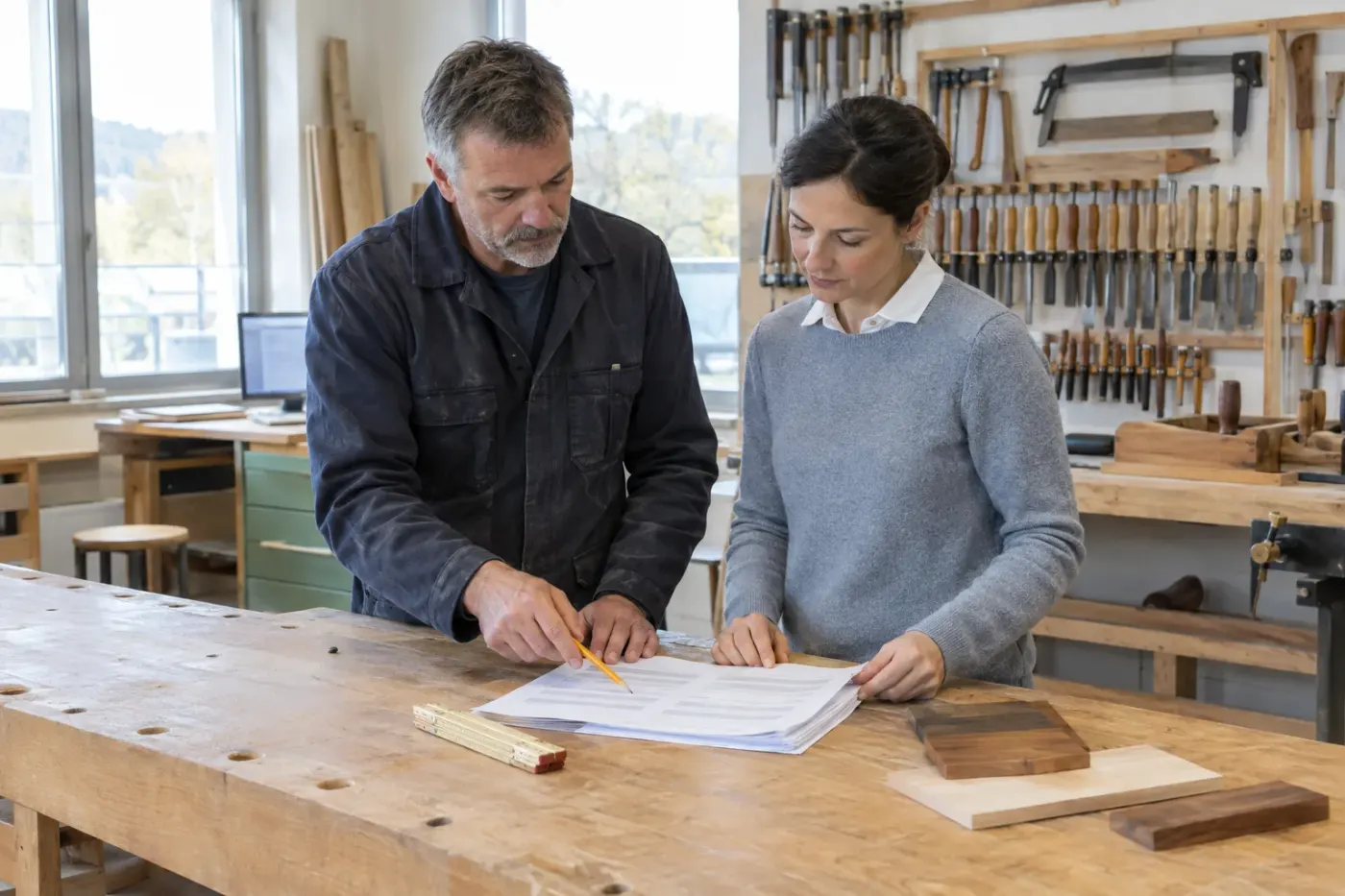
Some decisions belong in no draft, and here they stay firmly with the team.
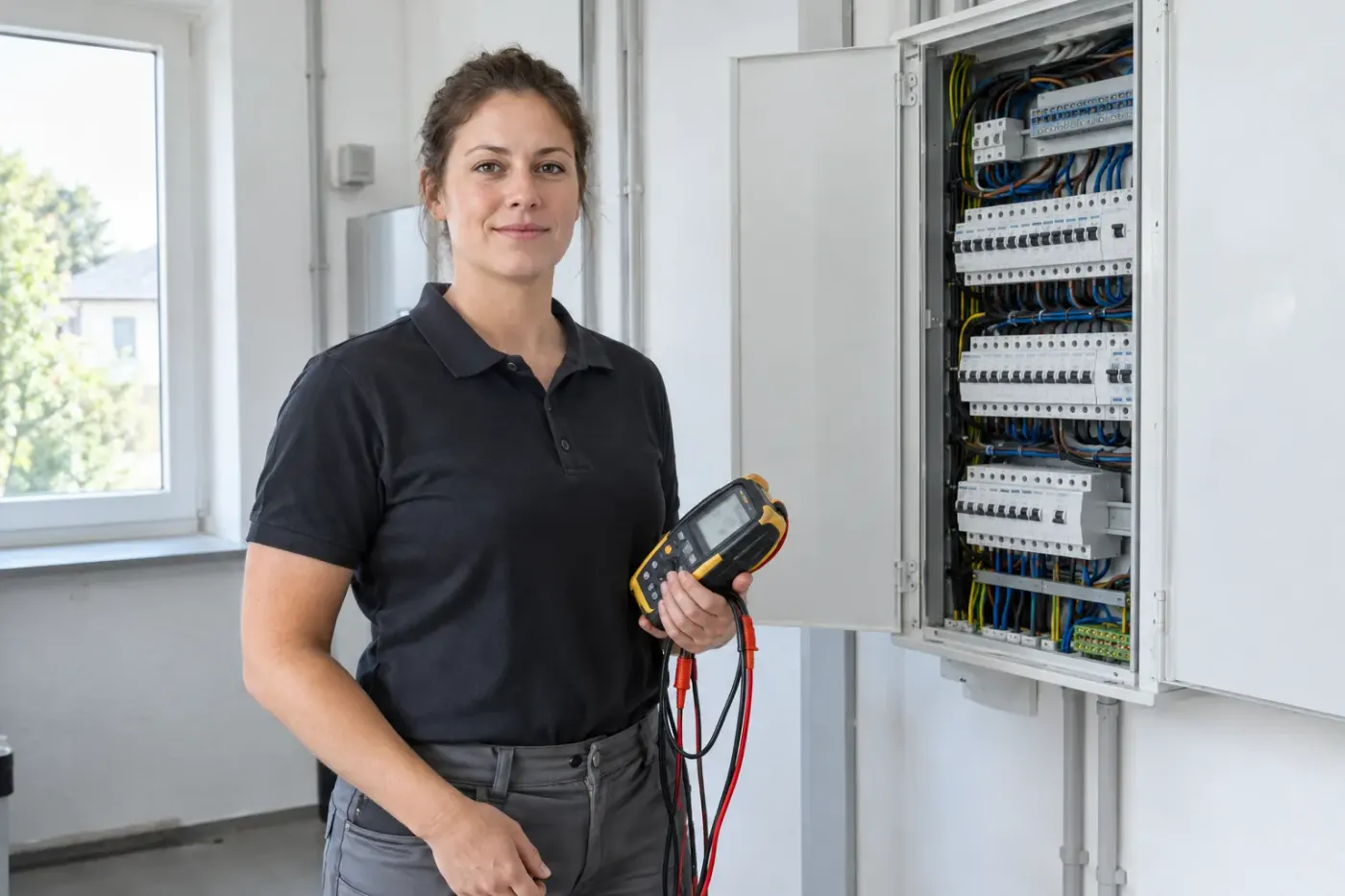
- Technical and safety decisions belong to the qualified tradesperson, for example sizing a heating system, work on gas and electrical installations, or fire protection.
- Whether the firm formally raises concerns about how a job is specified is the master craftsman's call.
- Whether an installation meets a standard is not for VAF to judge. Measurements and test reports are assessed by whoever did the testing.
- VAF is no substitute for binding advice on legal questions such as warranty or late payment.
- Hours, quantities and site diary entries come from the team's own records, and anything not in them does not belong in the draft.
Why local
In a 2025 Bitkom survey, 4 percent of the craft businesses asked were using AI, and 96 percent named IT security and data protection as obstacles.
VAF runs on a computer in the business, such as an office PC or server. If the language model runs locally there too, inquiries, draft quotes and notes are processed on that machine instead of going to a model provider. Fewer parties see customer data that way. That is not a data protection guarantee. The mailbox stays with the email provider, and the firm still decides what may be done with which data.
Which model runs locally depends on the machine. If the hardware falls short, a model can be connected through an API such as the Veyllo API, and the content of each request then goes to that provider.
Whether this example fits your business depends on how you work. In the Blueprint you can plan, without obligation, which tasks VAF takes on, where the data comes from and who on your team approves.